Halal certification – WHU World Halal Union
About us
World Halal UnionWelt Halal Union
WHU has set itself the goal of meeting the individual needs of every client in the Halal certification process. In Halal certification, WHU focuses on food and cosmetics, and also offers consulting and training. Halal certification has many benefits which, in the production of food and cosmetics, lead to respectful interaction between people, animals and nature. Production is sustainable and economically responsible.
Independent
WHU is an independent and accredited inspection and certification body for Halal products. With a technical and scientific focus, our certification organisation specialises in independently inspecting and certifying products and production systems of the food industry in accordance with Islamic dietary laws and purity requirements (Halal guidelines). With our quality-based certification system, we offer consumers and companies alike secure and credible certification of Halal products according to high, recognised standards.
Corporate philosophy
It is our corporate philosophy that Halal certification must assure consumers that products are safe and fit for consumption. For Muslims, our Halal certification provides a guarantee that the products have been manufactured in accordance with Islamic guidelines. For non-Muslims, Halal products are quality products simply by virtue of the concept of halal and healthy, as we strongly advise all applicants for Halal certification to meet the GMP and HACCP requirements. Consequently, products certified as Halal by WHU are safe for consumption or use, nutritious and of high quality.
HALAL standards
The result of our cooperation with the OIC/SMIIC Halal standards guarantees that products and services certified by WHU receive lasting recognition and a high level of acceptance worldwide. Nevertheless, we continuously benchmark our inspections and certification process against other recognised standards in order to maintain our leading position. This includes continuously updating our methods and quality levels, which are based both on internationally recognised food safety standards and on the requirements laid down in the Halal guidelines.
HALAL standards
There is no single internationally recognised standard. Standards differ from country to country. We certify Halal according to the following standards:
- OIC/SMIIC 1:2012 (DHB-TS OIC/SMIIC 1:2012)
- HDC – Halal Development Council - Malaysia
- DHC-Malaysia - Halal Industry Development Corporation
- Malaysia (JAKIM)
- Indonesia (MUI)
- United Arab Emirates (UAE)
- Singapore (MUIS)
Our quality policy
EVERY CLIENT IS UNIQUE Our principle and goal is the continuous development and improvement of the methods of service delivery that we offer our clients in the certification of Halal management systems. In step with today's rapidly changing organisational and technical conditions, our staff are trained to be highly qualified, independent and impartial in all areas. The training conveys the rules and principles required by international standards and guidelines such as ISO/IEC 17021, ISO 19011 and EA 2/17. Equipped with this knowledge, we offer a punctual, fast and reliable service to the benefit of every one of our clients. Our policy is based on client orientation, providing a fast service of a high quality standard.
Our primary objective
Our primary objective is to conduct audits with our excellently trained staff and qualified pool of auditors, as well as persons with sector-specific experience in the relevant fields, that help clients to gain added value from the certification process itself. With this conviction, we aim to become the leading company in the sector. We are aware that we can only achieve this goal with the participation of all internal and external staff. We are constantly working to increase the qualifications of all staff and the effectiveness of our processes and of the pool of auditors and experts by aligning the procedures within our scope of activities with a system based on performance measurement. Our company is furthermore aware that every activity is part of continual improvement and undertakes, under the slogan “Every client is unique”, to apply the systems approach in management and the principles of truth and impartiality in decision-making.
additional quality features
Services
our services
Our quality policy: “Every client is unique”.
Consulting and certification
Halal food production and Halal certification
Analyses and hygiene inspections
Chemical and microbiological analyses
Training and hygiene consulting
Internal audit training
Halal certifications
It all began in 1960, when Muslim majorities in various countries called for Halal certification to be regulated and safeguarded.
The resulting Halal certification concepts are now recognised and practised in Muslim countries (above all in the OIC, the Organisation of Islamic Cooperation). The differing understandings of Halal certification were difficult to control, and various standards emerged.
Alongside a globally practised “common understanding” and “mutual recognition”, several organisations were founded that formed the basis:
- In 1999, the World Halal Council, founded in Jakarta (Indonesia);
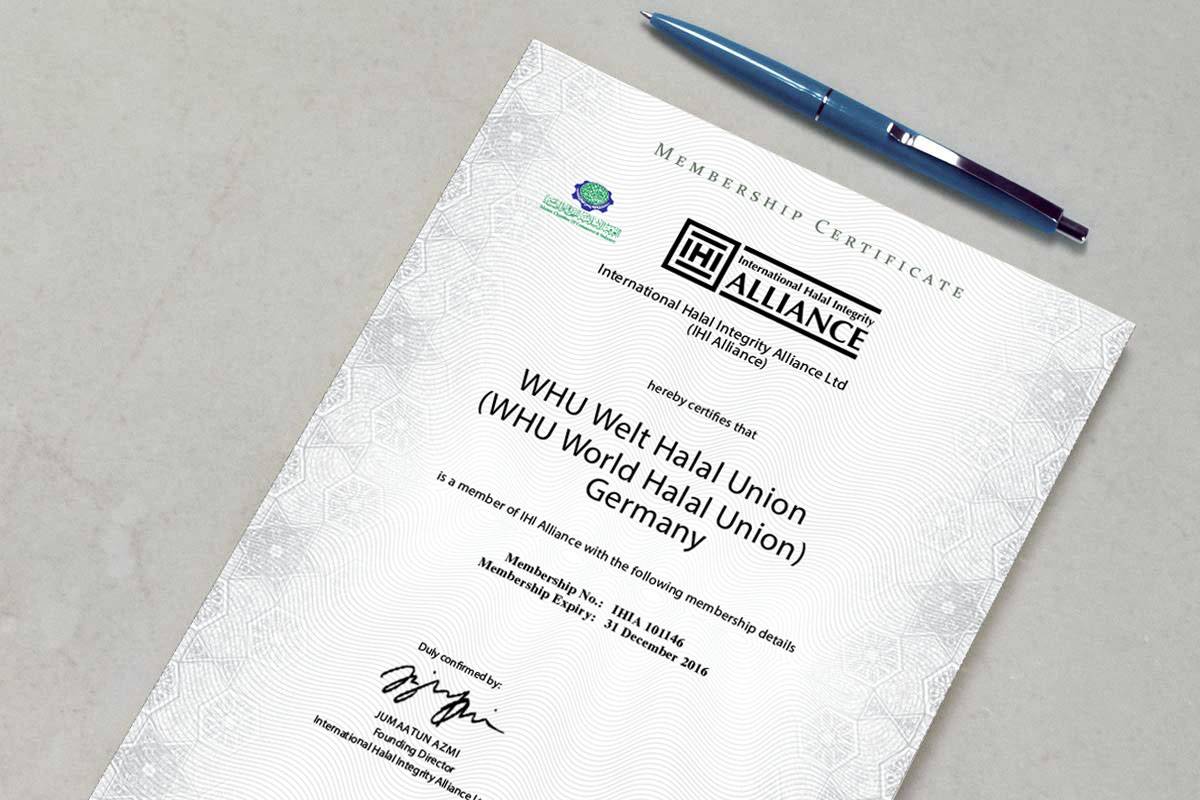
- in 2007, the Halal Integrity Alliance (“IHI Alliance”) as well as JAKIM in Malaysia and, finally, in 2010, the founding of the Organisation of Islamic Cooperation (OIC) with the SMIIC standard.
The OIC/SMIIC standard is of greater value because it places more requirements on the certificate holder than before; it is not only a religious standard but has also integrated the following international food standards:
- CODEX STAN 1 (General standard for the labelling of prepacked foods)
- CAC/RCP 1 (Recommended international code of practice general principles of food hygiene)
- CAC/RCP 58 (Code of hygienic practice for meat)
- ISO 22000 (Food safety management systems – Requirements for any organization in the food chain
- ISO 22005 (Traceability in the feed and food chain – General principles and basic requirements for system design and implementation
- Good manufacturing practice (GMP)
- Good hygienic practice (GHP)
- Food Safety
- Genetically modified food (GMF)
- Genetically modified organisms (GMO)
- EU HACCP Codex
Philosophy
It is our corporate philosophy that Halal certification must assure consumers that products are safe and fit for consumption. For Muslims, our Halal certification provides a guarantee that the products have been manufactured in accordance with Islamic guidelines. For non-Muslims, Halal products are quality products simply by virtue of the concept of “Halal and healthy”, as we strongly advise all applicants for Halal certification to meet at least the GMP and HACCP requirements. Consequently, products certified as Halal by WHU are safe for consumption or use, nutritious and of high quality.
Our certification process is likewise aligned with the OIC/SMIIC standards. These implemented standards continue to gain broad recognition for maintaining excellence in the field of Halal certification marks.
The result of our cooperation with the OIC/SMIIC Halal standards guarantees that products and services certified by WHU receive lasting recognition and a high level of acceptance worldwide.
Certification
In predominantly Muslim countries, it is taken for granted that food is “halal” in accordance with religious rules.
Thus, for certification it is mandatory to pronounce the name of Allah when slaughtering each animal.
With the certificate, the manufacturer assures the customer that the food has been produced in accordance with Islamic religious dietary laws and is therefore “halal”. Health and hygiene aspects are examined separately during certification, but may come into play, for example, through the prohibition on consuming food that is harmful to health.
In addition to process certification, which includes interviews and checks of the origin of goods and of the production site and processes, some certifiers carry out random testing for the presence of pork by means of genetic testing, as well as chemical analyses for alcohol.
Certifications are sometimes carried out for promotional reasons, for example for foods such as pasta, where there is hardly any possibility of violating the rules in the first place. The exact requirements for certification differ in detail, often depending on the interpretation of the Quran by the authority on which the certifier relies. This does not concern the basic dietary laws themselves, but their specific interpretation, e.g. with regard to the design and use of production facilities. For instance, there are differing views as to whether animals stunned before slaughter in accordance with German animal welfare regulations are “halal” or not.
Implementing HALAL certification
Requirements
- Use of Halal-compliant raw materials in the recipe.
- Halal compliance must be verifiable.
- There must be no mixing of Halal-compliant and non-compliant raw materials.
- There must be no mixing of Halal-compliant and non-compliant semi-finished goods.
- There must be no cross-contamination in the raw material store.
- There must be no cross-contamination during production or on the production equipment.
- There must be no mixing of finished products.
- Cleaning agents and other auxiliary materials must not jeopardise
the Halal status. - Product traceability must be ensured.
Process characteristics
- Develop a clear recipe based on raw materials that are available in Halal quality.
- Specifications must clearly demonstrate Halal compliance.
- Clear labelling of raw materials (colour code, coloured labels, clips, etc.).
- Standard measures to prevent cross-contamination.
- Production in daily batches with complete cleaning in between.
- Have specifications and recipes approved by the Halal certifier.
- Raw materials must be adequately packaged.
- Specific Halal training for staff.
- Carry out analyses for cross-contamination (PCR).
Halal – not just about food
“Halal” as a term for
- improved living conditions for people and animals
- safe, clean and healthy food and consumer goods
- sustainable and responsible business practices
- respectful and fair treatment of all participants
in supply chain management (SCM)
Relevant Halal criteria / information
Essentially, the concept of Halal is far more comprehensive and is not limited to the slaughter of animals according to Islamic guidelines. For example, the Halal concept requires that the cleanliness of the sources of raw materials and of workplaces, as well as the hygiene and safety of employees and the environment, are observed throughout the production process, from the very beginning through to the finished product. The Halal concept is therefore not merely a standard for food. The following defines Halal more closely in the production process:
- Proper and moral business ethics
- Cleanliness of the workplace and operating facilities
- Fair treatment of employees
- Preservation of nature and the environment
- Sustainable development
Furthermore, the products must be free from the following:
- any human body parts or ingredients of animal origin that are forbidden to Muslims, or whose use is forbidden because they come from animals that were not slaughtered according to Islamic guidelines
- substances or genetically modified organisms (GMO)
that have been classified as Najas (impure) under Islamic guidelines - aliphatic alcohols
- irradiated raw materials
- ingredients that could harm the consumer
or the end user
In addition, no cross-contamination may occur during the production process and logistics. If the production process comes into contact with non-Halal products, thorough cleaning must be carried out before Halal production starts (the process must guarantee the complete removal of residues, odours and/or colour in order to eliminate the impure substances, followed by a final rinse with water). This applies to all associated machinery, equipment, utensils, surfaces and clothing, all of which must be free of non-Halal components before the Halal products are handled, prepared, manufactured and packed. Strict procedures must be in place to prevent packaging mix-ups or similar errors.
Halal – not just for Muslims
From a health perspective, Halal appears to be a religiously driven concept, as it is a fundamental principle found in the religion. However, the range of possible applications and business opportunities of the Halal concept is so far-reaching that it is not only members of the Islamic faith who are involved. The Halal concept is thus fully capable of including others, regardless of origin and religion, as long as the Halal requirements are met in the production process and in services. The Halal concept in no way excludes non-Muslims from enjoying ethically produced, high-quality Halal goods. Considering the Halal ethno-system, it is not surprising that there are already customers today who do not profess Islam but nevertheless buy Halal-certified food.
Halal seminars / training
In order to train interested parties and entrepreneurs who are, or wish to become, active in the Halal industry, and at the same time to raise awareness of the global competitiveness of the Halal industry, WHU would like to offer you its Halal training programme. This programme will further strengthen understanding of and trust in the Halal market, broaden its global appeal by raising awareness of the unique characteristics of Halal products and, in any case, increase knowledge within the organisation. We believe that this training programme will benefit you in terms of recognition, marketing and building momentum.
We also believe that such cooperation, through the real-time application of Halal both locally and internationally, will present Halal as a preferred global standard for humanity, considering that the demand for Halal food is not limited to food manufacturers and consumer goods services, but at the same time also extends to non-food manufacturers, including but not limited to education, catering, pharmaceuticals and retail.
Benefits for companies
additional quality features
The high requirements of Halal certification make the products attractive to all consumers who attach importance to quality and control.
Global data
With a global customer base
of 1.8 billion Muslims, Halal is today
one of the fastest-growing global markets.At the same time, with annual growth of around 1.84%,
Muslims are the fastest-growing population group.It is also an emerging market force
that attracts non-Muslims with its healthy,
hygienic and contamination-free
principles of food production.The volume of Halal products is estimated at around
USD 2.1–2.3 trillion.Of this, approx. USD 675–700 billion
is accounted for by the food sector.European data
In Europe, the Halal market is estimated at EUR 70 billion.
In France alone, the sector is worth EUR 7.5 billion,
exceeding even sales of organic products.In Germany, the volume is around EUR 5 billion,
with a large share accounted for by meat and fish products.
Halal and animal welfare, social responsibility
In Islam, animal welfare is of very great importance. Meat and meat products, as well as products containing meat, inspected by WHU Germany come from animals that have been stunned and slaughtered in accordance with the European animal welfare slaughter regulation and have been fully bled. Halal certification also incorporates aspects such as organic production, Fair Trade, SA8000, animal welfare and corporate social responsibility. Since Muslims strive to act with “Ihsan”, i.e. to perform every action in the best possible way and thus to apply quality in all things, Halal certification must essentially cover the entire production process from the field to the finished product. Halal meat products are often produced by slaughter without stunning. In Germany, this is prohibited under §17 TierSchG (German Animal Welfare Act). Anyone who violates this regulation commits at least an administrative offence.
This can only be avoided by applying for an exemption under §4 TierSchG upon presentation of a certificate of competence. An exemption may also be applied for on religious grounds. According to the case law of the Federal Constitutional Court (ritual slaughter ruling) of 23 November 2006, owing to the freedom of religion and belief guaranteed without restriction by Art. 4 of the Basic Law, and owing to the occupational freedom of an Islamic butcher, an exemption must be granted upon application, provided that the meat of the slaughtered animal is consumed by persons whose mandatory religious rules prohibit, without exception, the consumption of meat from animals that have not been ritually slaughtered. However, the ritual slaughter must be carried out by a competent person in an approved and registered slaughterhouse and be supervised by the competent veterinary office.
“Halal” (ḥalāl, Arabic حلال) – or in Turkish “Helal”.
Halal
What is Halal?
“Halal” (halāl, Arabic حلال) – or in Turkish “Helal”.
Halalحلال
is an Arabic word and can be translated as “permitted” and “permissible”.
makruh (undesirable)
These things are not explicitly forbidden, but tend towards haram.
haram (حرام)
forbidden
Halal
What is Halal? Definition of Halal
“Halal” (halāl, Arabic حلال) – or in Turkish “Helal”. Halal (Arabic حلال, halāl) is an Arabic word and can be translated as “permitted” and “permissible”. The meaning of Halal is “that which is permissible, allowed and permitted”. Halal thus encompasses all things and actions that are permitted, permissible and in conformity with Islam from an Islamic point of view. It denotes all things and actions that are allowed or permissible under Islamic law. As the third of the five categories of human actions in Islamic jurisprudence, it stands between haram (حرام), forbidden actions, and fard (فرض), obligatory actions. Between halal and haram there is a grey area known as makruh (مكروه). Makruh (frowned upon/undesirable) denotes all things that are not explicitly forbidden but tend towards haram. Muslims should also avoid this grey area as a precaution.
Similar to organic labels or the Jewish kosher labels for food, so-called Halal certificates are found in the trade. Their purpose is to label products whose manufacture is ensured to comply with the Halal rules.
“Halal – Helal” stands for “permitted”, “permissible” or “pure”. All things and deeds that are allowed or permissible under Islamic law are referred to as Halal. In contrast to this stands
Haram (forbidden, impure). The borderline area between Halal and Haram is described as
Makruh (undesirable). Foods or other aspects that fall into this category are not explicitly forbidden, but tend towards Haram. Muslims should therefore avoid them completely. However, the question of Halal covers not only food, but also food additives and packaging materials, right through to the transport of the products. Halal therefore becomes a concept that strives to improve living standards and harmony between people and nature.
Religious background
Allah (the Glorified and Exalted) makes known in the Quran what has been forbidden: the dietary laws are set out in the Quran and the Sunnah. In principle, all foods are permitted except those that have been expressly or unambiguously forbidden. A Muslim is forbidden to eat pork and its by-products, and to consume intoxicating drinks (alcohol) and blood. Only animals that are permissible for consumption, have been slaughtered in accordance with the rules and had not already died may be eaten. An animal that has not been slaughtered is permitted if it was killed by hunting animals specially trained for this purpose, but not by wild predators of unknown origin and health. Animals sacrificed by other religions are also forbidden.
In the Quran, Surah 5, verse 3 states:
Forbidden to you are dead animals, blood, the flesh of swine, and that over which a name other than Allah's has been invoked; the animal killed by strangling; the animal beaten to death; the animal killed by a fall or by being gored; and that which has been eaten by predators, except what you have slaughtered; and that which has been slaughtered on an altar (as an offering to idols). (..) But whoever is compelled by famine, with no inclination to sin – then indeed, Allah is All-Forgiving, Merciful.”
As can be seen from the verse, Islam requires Muslims to observe certain rules on eating, drinking and slaughter.
The following is narrated from the Prophet Muhammad (peace be upon him):
“The lawful is clear and the unlawful is clear, and between the two there are doubtful matters of which many people have no knowledge. Whoever keeps away from them has thereby absolved himself (of blame). And whoever falls into this area has fallen into Haram.”
Traditional slaughter without stunning, known as ritual slaughter, is practised in most countries and preferred by most Muslims. Although stunning is compatible with Islamic law (fiqh), as Muslim scholars have confirmed, it is not accepted by most Muslims, as they fear that the animals may not survive the stunning.
Some traditions refer to Surah 5, verse 5, and say that what has been slaughtered by Christians or Jews is also permitted: This day all good things have been made lawful for you. And the food of those who were given the Scripture is lawful for you, and your food is lawful for them. (..)
What is “Halal”, what is “Haram”?
What is “Haram”?
Harām (Arabic حرام, harām) is an Arabic adjective which, in Islam, denotes everything that is “forbidden, inviolable, sacred” according to the Sharia. In its ambiguity, it corresponds most closely to the concept of taboo in English.
The opposite of harām is halāl (حلال), which denotes what is permitted under the Sharia. The adjective harām is to be distinguished from the Arabic noun Haram, which denotes a sacred precinct.
As a term for “that which is forbidden”, harām already occurs in the Quran. In Surah 16:116, for example, people are called upon not to claim with lying tongues that one thing is permitted (halāl) and another forbidden (harām). According to Islamic understanding, a Muslim commits a sin by carrying out an act classified as harām by the Quran or by Islamic jurisprudence. In this sense, harām is to be distinguished from the adjective mamnu' ممنوع / mamnūʿ, which denotes what is forbidden under secular law.
Harām is the last of the five categories of human actions in Islamic jurisprudence.
What is “Makruh”?
In Islam, makruh (Arabic مكروه, makrūh) refers to actions that are disliked according to religious understanding and should therefore be avoided. According to Islamic tradition, a Muslim is not punished for performing disliked actions, but is rewarded for refraining from them.
It is the fourth of the five categories of human actions in Islamic jurisprudence.
Disliked acts include, for example, wasting water (e.g. during ritual ablutions) and disregarding recommended or preferred acts – both during and outside acts of worship.
In general, any excessive action is regarded as disliked.
According to some scholars, smoking is at least makruh, while others even classify it as haram.
What is “Fard”?
Fard (Arabic فرض , fard “duty”), also Arabic فريضة , farīda, means “religious duty”, “(divine) ordinance”, “ordinance”. Fard is the sum of those religious obligations that Muslims must fulfil unconditionally in their ritual life. The corresponding verb is farada or iftarada and accordingly occurs in both the Quran and the Hadith with the meaning “to impose something on someone as a (religious) duty”, “to ordain”, “to declare binding”.
What is “Sunnah”?
Sunnah (Arabicسنة ‘custom, habitual practice, transmitted norm’), pl. sunan (سنن), is a term which in pre-Islamic times denoted the customs, practices, values and norms of the various Arab tribes, but which acquired a religious meaning in the course of the formation of Islam by becoming the short term for the sunnat an-nabī to be followed, the “practice of the Prophet (Hz. Muhammad)”.
In this sense, Sunnah is used in particular in Islamic jurisprudence and the science of tradition. Over time, various shifts in the meaning of the term have occurred. The corresponding verb is استنّ سنّ, sanna / istanna ‘to prescribe something, to introduce something’.
The following are forbidden:
- Foods obtained from plants are in principle “halal”, with the exception of intoxicating and toxic products. “Haram” covers all things that Muslims are not permitted to consume.
With regard to diet, the following main categories are considered “haram” (forbidden):
- Pigs, dogs, snakes, monkeys, carnivorous animals, e.g. lions, tigers, bears, birds of prey, e.g. eagles, vultures, rats, scorpions, animals not slaughtered according to halal rules, reptiles, amphibians, insects, carrion, blood, intoxicants, alcohol and alcoholic beverages.
- “Pig” includes all foods and ingredients that may contain pig components or are derived from them, e.g. gelatine. Pork is forbidden because the pig, as an omnivore, also eats waste and faeces. According to the Quran, people should eat only what is “good”.
- The meat of birds of prey, of land animals without ears, e.g. snakes, and of wild boar is also “haram”. Horse meat and donkey meat are likewise forbidden, as these animals are intended for carrying loads. Only the meat of slaughtered animals may be consumed, i.e. the meat must not come from animals that have died of themselves. The consumption of animals sacrificed by other religions is also forbidden. The consumption of fish is expressly permitted. In addition to forbidden foods of animal origin, “haram” also includes intoxicating and toxic products of plant origin as well as alcohol and alcoholic beverages.
- In addition to forbidden foods of animal origin, “haram” also includes intoxicating and toxic products of plant origin as well as alcohol and alcoholic beverages.
The classification into “haram” and “halal” is not always that simple. The many processes involved in the manufacture and preparation of food can lead to contamination that renders permitted food “haram”. Food can be contaminated by forbidden additives such as gelatine from pig components, emulsifiers, flavourings or colourings, or be transported or stored together without adequate packaging.
Halal
Quran Surahs / Helal ile ilgili Ayetler:
“Halal” (halāl, Arabic حلال) – or in Turkish “Helal”.
Bakara Suresi / 168. Ayet
يَا أَيُّهَا النَّاسُ كُلُواْ مِمَّا فِي الأَرْضِ حَلاَلاً طَيِّباً وَلاَ تَتَّبِعُواْ خُطُوَاتِ الشَّيْطَانِ إِنَّهُ لَكُمْ عَدُوٌّ مُّبِينٌ
The Cow / Verse 168.
O mankind, eat of what is lawful and good on the earth, and do not follow the footsteps of Satan; indeed, he is to you a clear enemy.
Bakara Suresi / 172 - 173. Ayet
يَا أَيُّهَا الَّذِينَ آمَنُواْ كُلُواْ مِن طَيِّبَاتِ مَا رَزَقْنَاكُمْ وَاشْكُرُواْ لِلّهِ إِن كُنتُمْ إِيَّاهُ تَعْبُدُونَ
The Cow / Verse 172.
O you who believe, eat of the good things which We have provided for you, and be grateful to Allah if it is He whom you worship. 173. He has forbidden to you only dead animals, blood, the flesh of swine and that over which a name other than Allah's has been invoked. But whoever is driven by necessity – neither disobedient nor transgressing the limit – there is no sin upon him. Allah is All-Forgiving, Merciful.
Maide Suresi / 3. Ayet
حُرِّمَتْ عَلَيْكُمُ الْمَيْتَةُ وَالْدَّمُ وَلَحْمُ الْخِنْزِيرِ وَمَا أُهِلَّ لِغَيْرِ اللّهِ بِهِ وَالْمُنْخَنِقَةُ وَالْمَوْقُوذَةُ وَالْمُتَرَدِّيَةُ وَالنَّطِيحَةُ وَمَا أَكَلَ السَّبُعُ إِلاَّ مَا ذَكَّيْتُمْ وَمَا ذُبِحَ عَلَى النُّصُبِ وَأَن تَسْتَقْسِمُواْ بِالأَزْلاَمِ ذَلِكُمْ فِسْقٌ الْيَوْمَ يَئِسَ الَّذِينَ كَفَرُواْ مِن دِينِكُمْ فَلاَ تَخْشَوْهُمْ وَاخْشَوْنِ الْيَوْمَ أَكْمَلْتُ لَكُمْ دِينَكُمْ وَأَتْمَمْتُ عَلَيْكُمْ نِعْمَتِي وَرَضِيتُ لَكُمُ الإِسْلاَمَ دِينًا فَمَنِ اضْطُرَّ فِي مَخْمَصَةٍ غَيْرَ مُتَجَانِفٍ لِّإِثْمٍ فَإِنَّ اللّهَ غَفُورٌ رَّحِيمٌ
The Table Spread / Verse 3.
Forbidden to you are dead animals, blood, the flesh of swine, and that over which a name other than Allah's has been invoked; the animal killed by strangling; the animal beaten to death; the animal killed by a fall or by being gored; and that which has been eaten by predators, except what you have slaughtered; and that which has been slaughtered on an altar (as an offering to idols); and that you seek to learn your fate by divining arrows. That is grave disobedience. This day those who disbelieve have despaired of your religion, so fear them not, but fear Me. This day I have perfected your religion for you, completed My favour upon you and chosen Islam for you as your religion. But whoever is driven by hunger, with no sinful intent – then Allah is All-Forgiving, Merciful.
Maide Suresi / 4. Ayet
يَسْأَلُونَكَ مَاذَا أُحِلَّ لَهُمْ قُلْ أُحِلَّ لَكُمُ الطَّيِّبَاتُ وَمَا عَلَّمْتُم مِّنَ الْجَوَارِحِ مُكَلِّبِينَ تُعَلِّمُونَهُنَّ مِمَّا عَلَّمَكُمُ اللّهُ فَكُلُواْ مِمَّا أَمْسَكْنَ عَلَيْكُمْ وَاذْكُرُواْ اسْمَ اللّهِ عَلَيْهِ وَاتَّقُواْ اللّهَ إِنَّ اللّهَ سَرِيعُ الْحِسَابِ
The Table Spread / Verse 4.
They ask you what has been made lawful for them. Say: “All good things have been made lawful for you; and what you have taught your hunting animals and birds of prey (to catch for you), training them for the hunt and teaching them of what Allah has taught you. So eat of what they catch for you, and mention the name of Allah over it. And fear Allah; indeed, Allah is swift in reckoning.”
Maide / 62. Ayet
وَتَرَى كَثِيرًا مِّنْهُمْ يُسَارِعُونَ فِي الإِثْمِ وَالْعُدْوَانِ وَأَكْلِهِمُ السُّحْتَ لَبِئْسَ مَا كَانُواْ يَعْمَلُونَ
The Table Spread / Verse 62.
And you see many of them hastening into sin and transgression and the consumption of forbidden things. Evil indeed is what they do.
Maide / 82. Ayet
يَا أَيُّهَا الَّذِينَ آمَنُواْ لاَ تُحَرِّمُواْ طَيِّبَاتِ مَا أَحَلَّ اللّهُ لَكُمْ وَلاَ تَعْتَدُواْ إِنَّ اللّهَ لاَ يُحِبُّ الْمُعْتَدِينَ
The Table Spread / Verse 87.
O you who believe, do not declare unlawful the good things which Allah has made lawful for you, but do not transgress either. Indeed, Allah does not love the transgressors.
Maide Suresi / 88. Ayet
وَكُلُواْ مِمَّا رَزَقَكُمُ اللّهُ حَلاَلاً طَيِّبًا وَاتَّقُواْ اللّهَ الَّذِيَ أَنتُم بِهِ مُؤْمِنُونَ
The Table Spread / Verse 88.
And eat of what Allah has provided for you, lawful and good. And fear Allah, in whom you believe.
Enam Suresi / 118. Ayet
فَكُلُواْ مِمَّا ذُكِرَ اسْمُ اللّهِ عَلَيْهِ إِن كُنتُمْ بِآيَاتِهِ مُؤْمِنِينَ
The Cattle / Verse 118.
So eat of that over which the name of Allah has been mentioned, if you believe in His signs.
Enfal Suresi / 69. Ayet
فَكُلُواْ مِمَّا غَنِمْتُمْ حَلاَلاً طَيِّبًا وَاتَّقُواْ اللّهَ إِنَّ اللّهَ غَفُورٌ رَّحِيمٌ
The Spoils of War / Verse 69.
8. The Spoils of War /69. So eat of what you have gained (in war), lawful and good, and fear Allah. Indeed, Allah is All-Forgiving, Merciful.
Nahl Suresi / 114. Ayet
فَكُلُواْ مِمَّا رَزَقَكُمُ اللّهُ حَلالاً طَيِّبًا وَاشْكُرُواْ نِعْمَتَ اللّهِ إِن كُنتُمْ إِيَّاهُ تَعْبُدُونَ
16. The Bee / Verse 114.
So eat of the lawful and good things with which Allah has provided you, and be grateful for the favour of Allah, if it is He whom you serve.
Mü'minun Suresi / 51. Ayet
يَا أَيُّهَا الرُّسُلُ كُلُوا مِنَ الطَّيِّبَاتِ وَاعْمَلُوا صَالِحًا إِنِّي بِمَا تَعْمَلُونَ عَلِيمٌ
23. The Believers / Verse 51.
O messengers, eat of the good things and do righteous deeds. Indeed, I am fully aware of what you do.
The Halal market
Facts and figures
Halal products currently account for 20% of global food production.
Global data
With a global customer base
of 1.8 billion Muslims, Halal is today
one of the fastest-growing global markets.At the same time, with annual growth of around 1.84%,
Muslims are the fastest-growing population group.It is also an emerging market force
that attracts non-Muslims with its healthy,
hygienic and contamination-free
principles of food production.The volume of Halal products is estimated at around
USD 2.1–2.3 trillion.Of this, approx. USD 675–700 billion
is accounted for by the food sector.European data
In Europe, the Halal market is estimated at EUR 70 billion.
In France alone, the sector is worth EUR 7.5 billion,
exceeding even sales of organic products.In Germany, the volume is around EUR 5 billion,
with a large share accounted for by meat and fish products.
Business areas – industry sectors
WHU has set itself the goal of meeting the individual needs of every client in the Halal certification process. In Halal certification, WHU focuses on food and cosmetics, and also offers consulting and training. Halal certification has many benefits which, in the production of food and cosmetics, lead to respectful interaction between people, animals and nature. Production is sustainable and economically responsible.
Halal certification for companies in the following business areas:
- Food industry
- Chemicals
- Pharmaceuticals and medicine
- Cosmetics industry
- Slaughterhouses
- Healthcare, hospitals, rehabilitation
- Trade and services
- Consumer goods
- Education, schools, kindergartens
- Hotel and catering industry
Contact
Contact
for further information
We will be pleased to send you further information about our services.
Email form
WHU – WELT HALAL UNION Zertifizierungsstelle
WHU – World Halal Union Certification Body
Address
- Günhan KaplanLeiter der ZertifizierungsstelleHead of Certification Body
- Phone (work): +49 17 42 495 885
- Phone (work): +49 17 94 239 803
- Brudermühlstr. 12D-81371 München
- info@halal-zertifizierung.org
Web Links & Info
Web links / Information
On the websites of the organisations listed below, you will find further interesting information on the subject of Halal certification. You will also find links to our Halal standards / Halal food standards and standard-setting bodies, as well as to partner websites.
* For further information, please click on the respective logo *.
Memberships:
Standard-setting bodies:
 www.smiic.org (öffnet in neuem Tab)
 www.oic-oci.org (öffnet in neuem Tab)
 www.halal.gov.my (öffnet in neuem Tab)
 www.mui.or.id (öffnet in neuem Tab)
 www.hdcglobal.com (öffnet in neuem Tab)
 www.muis.gov.sg (öffnet in neuem Tab)
 www.fiqhacademy.org.sa (öffnet in neuem Tab)
 www.esma.gov.ae (öffnet in neuem Tab)